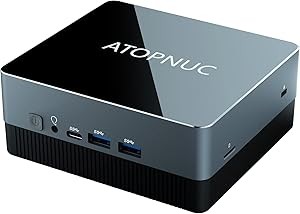
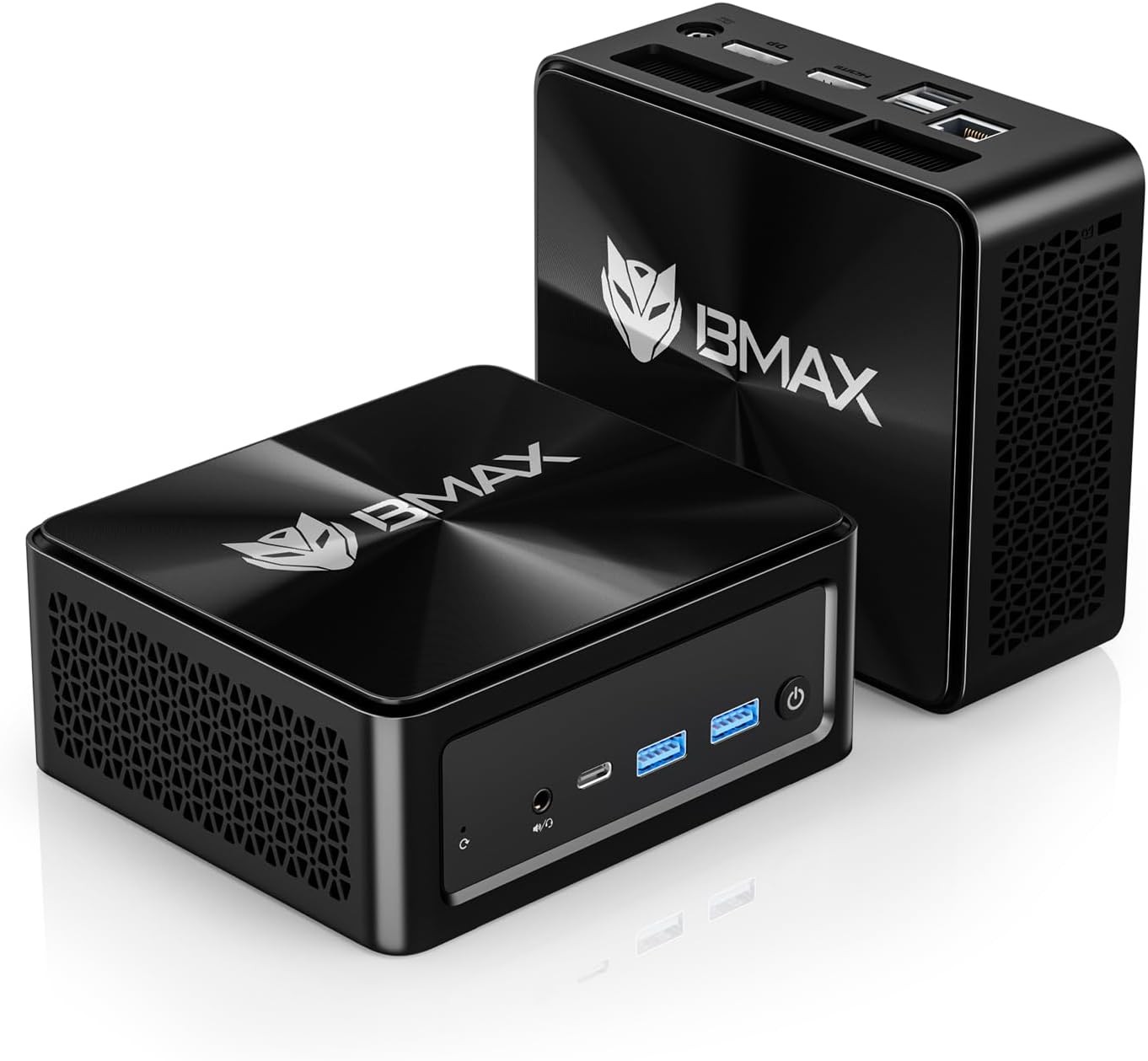
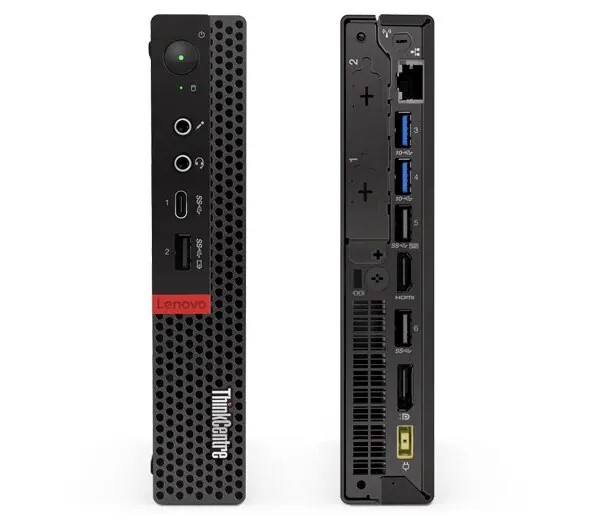
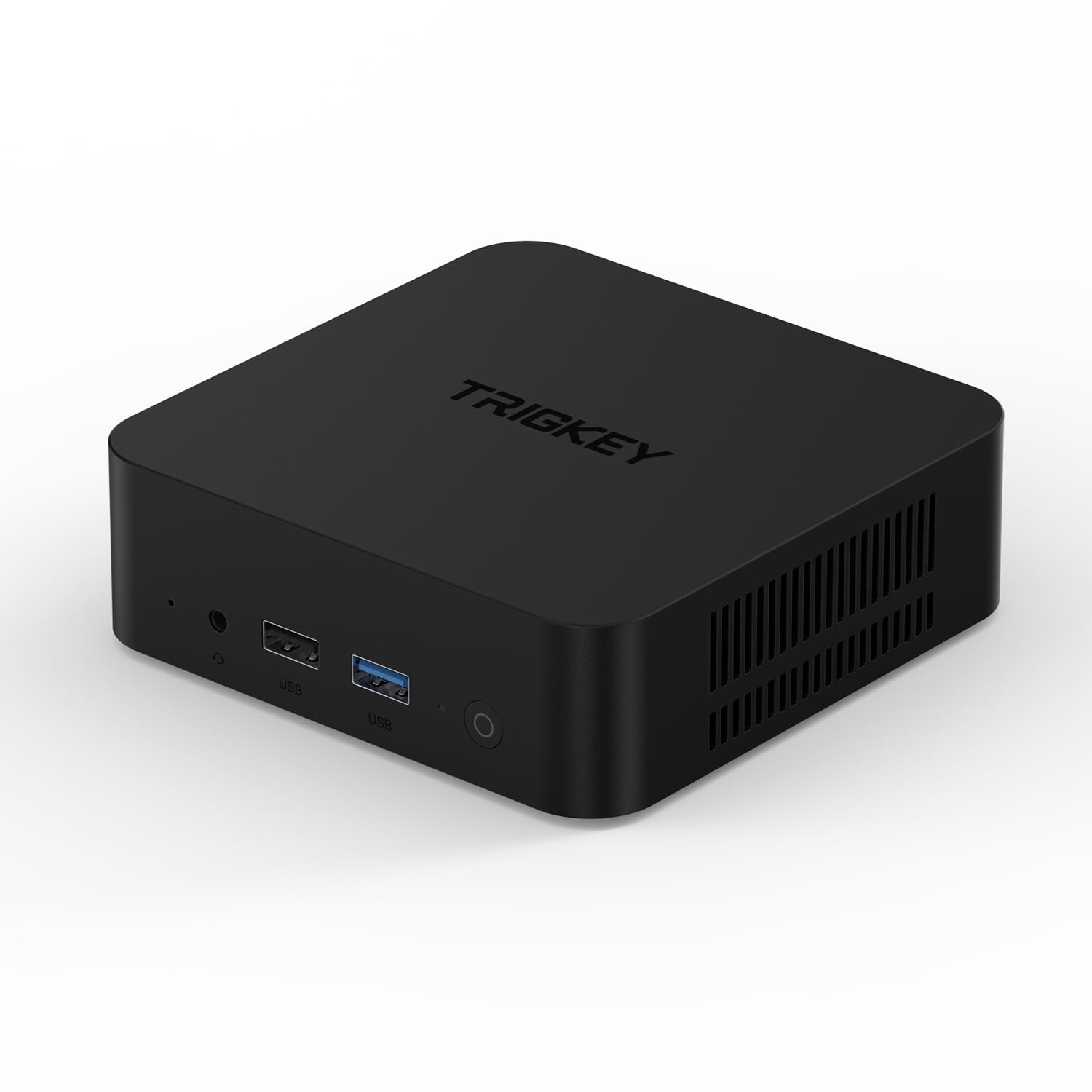
Recommended for office work, web browsing, media playback, light home or business use, local storage expansion, and very small desk setups. Consider ATOPNUC MX30 if you want a ultra-compact mini PC built around its listed Intel i3 3250U processor and AMD Vega 3 integrated GPU. It is less suitable for heavy gaming or GPU-accelerated workloads because no discrete or high-speed external GPU path is listed.
ATOPNUC MX30 features Intel i3 3250U with AMD Vega 3 integrated GPU, offering 1× 1G Ethernet and expanded internal storage. CPU details include Zen 1 CPU generation, 2 performance cores, and 4 threads. Memory support includes up to 32GB RAM across 2 slots at 2400 MT/s. Storage support includes up to 3 storage drives including 1 NVMe SSD slot, 1× PCIe Gen3 x4 NVMe, and 1× 2.5-inch SATA bay and SD card reader. Display support includes support for up to 2 displays. Networking includes 1× 1G Ethernet. Physical design includes a 125 × 110 × 50 mm chassis (0.69L). Cooling information lists 70 mm main fan. Power information lists 15W TDP. Lifecycle information lists 1-year warranty.
Based on its overall score of 147.1, ATOPNUC MX30 is positioned as an entry-to-midrange mini PC entry in this dataset; compare it against alternatives by CPU class, GPU type, memory ceiling, storage expansion, LAN, and port selection.
The ATOPNUC MX30 is a ultra-compact mini PC built around Intel i3 3250U and AMD Vega 3 integrated graphics. With a listed price around $130, it is aimed at buyers looking for basic office work, web browsing, digital signage, local storage expansion, very small desk setups. The core spec sheet is solid for its class: up to 32GB RAM across 2 slots at 2400 MT/s, up to 3 drives, including 1 NVMe slot (1 PCIe 3.0 x4 NVMe, 2.5-inch SATA, SD card reader), 1×1GbE, and basic display and USB connectivity. The 147.1 overall score suggests a more specialized or entry-level role, so it should be judged by fit-for-purpose features rather than raw benchmark ambition. The main reason to pause is fit: avoid it if you need modern AAA gaming or sustained GPU rendering; you need a high-speed external-GPU or advanced docking path; you need fast wired networking beyond basic Gigabit Ethernet. Overall, the ATOPNUC MX30 makes the most sense when its CPU/GPU balance, port selection, and expansion profile match your workload; otherwise, compare it against similarly priced mini PCs with better networking, quieter cooling, or stronger upgrade paths.