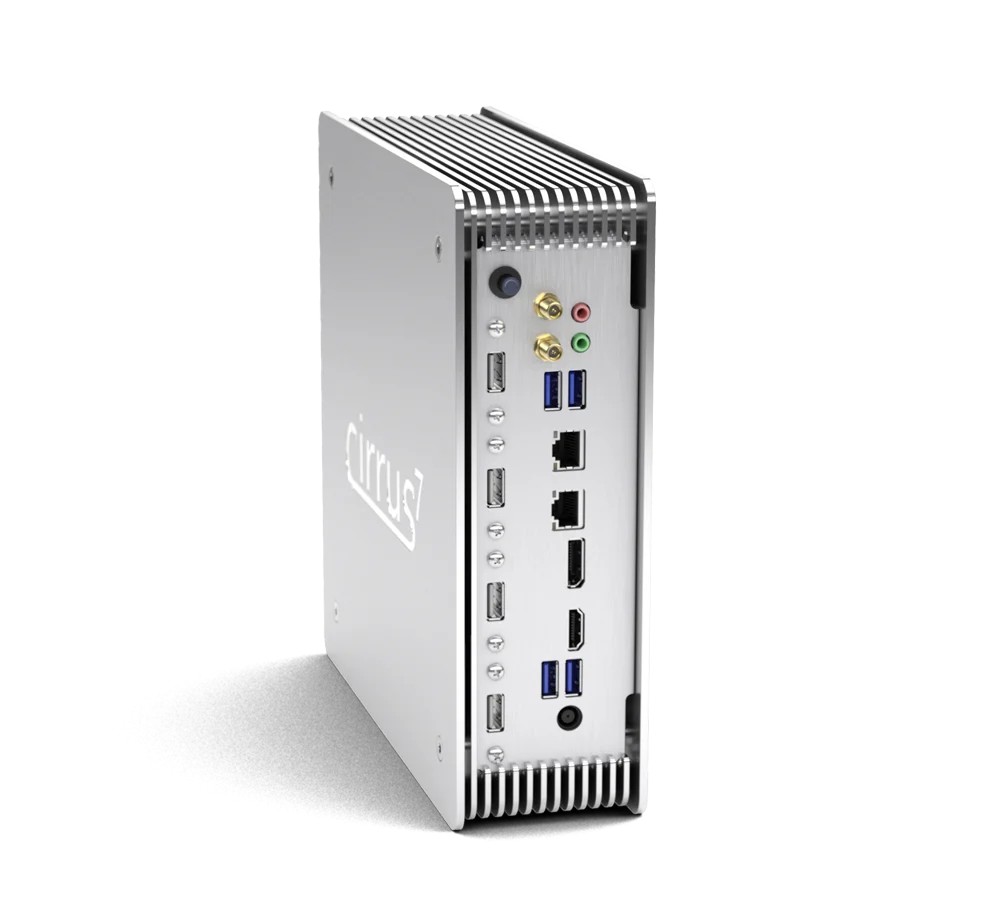
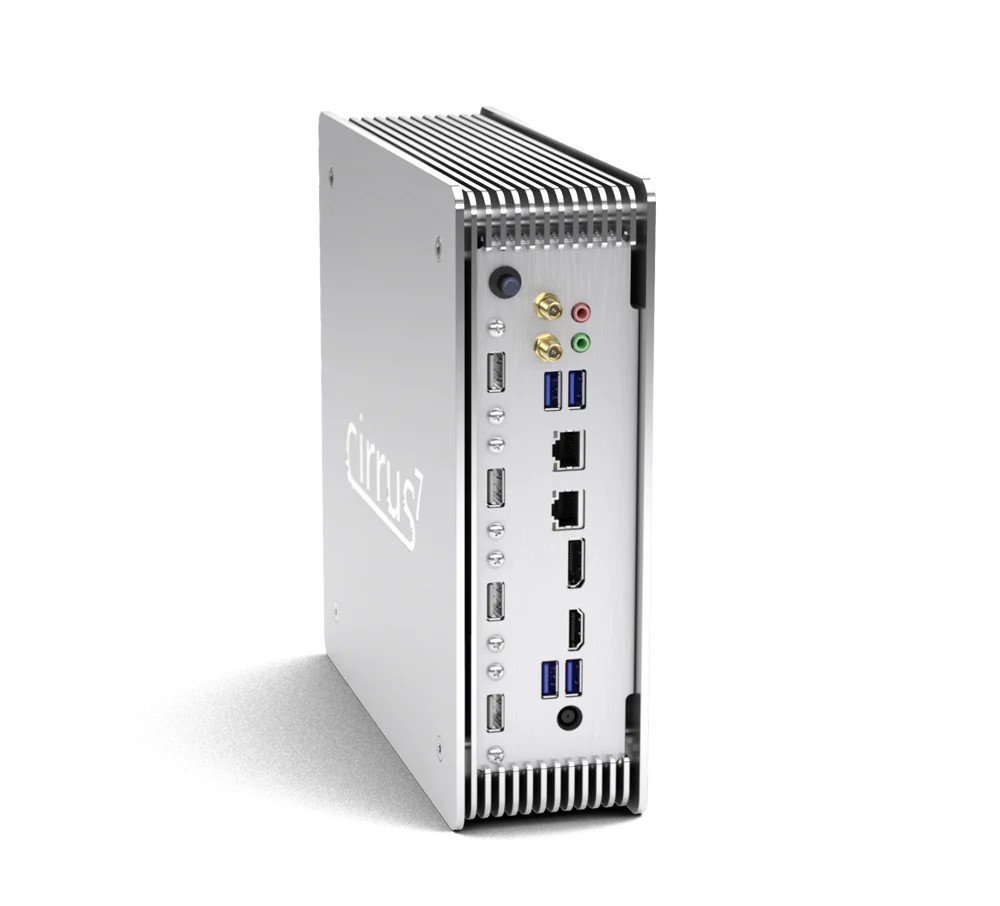
Recommended for office work, web browsing, media playback, light home or business use, memory-heavy workloads, and local storage expansion. Consider Cirrus 7 Nimbus Z790M G6900 if you want a larger performance-focused mini PC built around its listed Intel Celeron G6900 processor and Intel Intel UHD 710 integrated GPU. It is less suitable for heavy gaming or GPU-accelerated workloads because no discrete or high-speed external GPU path is listed.
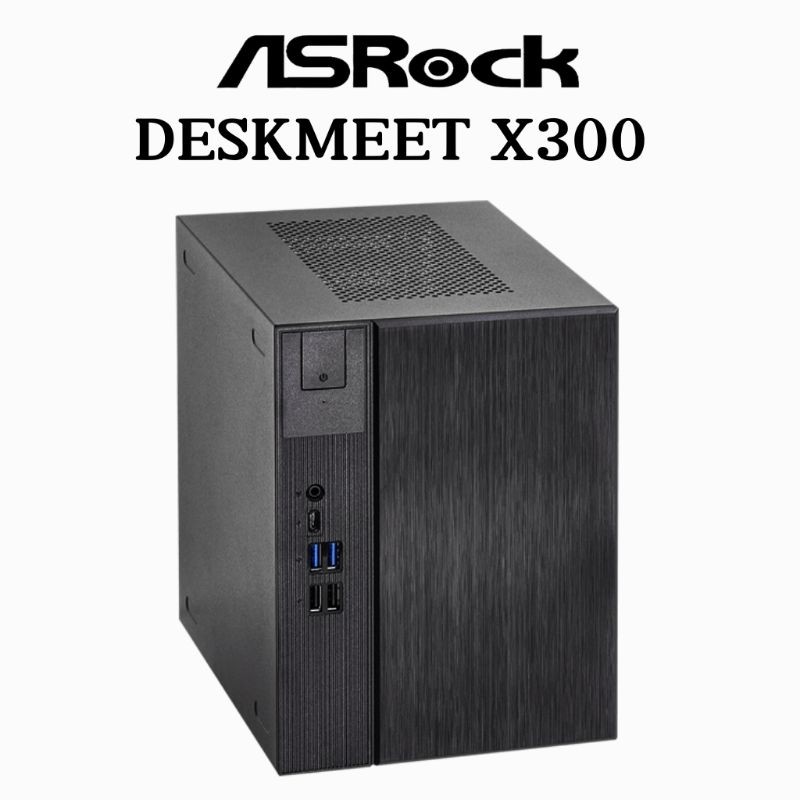
Cirrus 7 Nimbus Z790M G6900 features Intel Celeron G6900 with Intel Intel UHD 710 integrated GPU, offering 1× 2.5G Ethernet and 1× 1G Ethernet and expanded internal storage. CPU details include 14th CPU generation, 2 performance cores, and 2 threads. Memory support includes up to 96GB RAM across 2 slots at 7200 MT/s. Storage support includes up to 4 storage drives including 2 NVMe SSD slots, 2× PCIe Gen4 x4 NVMe, and 2× 2.5-inch SATA bays. Display support includes support for up to 3 displays. Port connectivity includes 1× PCIe x16 expansion slot. Networking includes 1× 2.5G Ethernet and 1× 1G Ethernet. Physical design includes a 246 × 246 × 90 mm chassis (5.45L). Lifecycle information lists 3-year warranty.
The overall score is not populated for Cirrus 7 Nimbus Z790M G6900, so this model should be evaluated by the listed hardware specifications rather than by a ranked dataset position.
The Cirrus 7 Nimbus Z790M G6900 is a small-form-factor mini PC built around Intel Celeron G6900 and Intel Intel UHD 710 integrated graphics. With pricing dependent on configuration and seller availability, it is aimed at buyers looking for basic office work, web browsing, digital signage, larger multitasking setups, router/firewall or homelab use. The core spec sheet is solid for its class: up to 96GB RAM across 2 slots at 7200 MT/s, up to 4 drives, including 2 NVMe slots (2 PCIe 4.0 x4 NVMe, 2.5-inch SATA), 1×2.5GbE + 1×1GbE, and basic display and USB connectivity. Because the overall score is not populated, this model is best evaluated by its listed specifications, price, and feature mix rather than a single rank. The main reason to pause is fit: avoid it if you need modern AAA gaming or sustained GPU rendering; you need a high-speed external-GPU or advanced docking path; you need a truly tiny mini PC. Overall, the Cirrus 7 Nimbus Z790M G6900 makes the most sense when its CPU/GPU balance, port selection, and expansion profile match your workload; otherwise, compare it against similarly priced mini PCs with better networking, quieter cooling, or stronger upgrade paths.